
🎯 Why Your Resume Might Be Invisible to Recruiters
You've spent hours perfecting your resume, and yet… nothing. No response from the company, no interview invitation. The reason? Your application may never have been read by a human. In the UK, US, and globally, the majority of large companies, recruitment agencies, and even job postings on LinkedIn and Indeed now use ATS software — Applicant Tracking Systems — to automatically filter resumes before a recruiter even sees them.
An ATS scans your document for keywords, evaluates its structure, and assigns a compatibility score. If your resume doesn't follow certain precise rules, it will simply be rejected from consideration, regardless of your experience level or how strong your profile is. In a job market where permanent and contract positions receive hundreds of applications, passing this first filter has become an essential step.
Here are the 7 essential rules for creating an ATS-compatible resume and maximising your chances of reaching an actual recruiter.
📋 Rules 1 to 3: Structure and formatting—the foundation of an ATS-friendly resume

Rule 1 — Choose the right file format
Your ATS optimization begins before you write a single word. File format is critical. Favour PDF when explicitly accepted, as it preserves your layout. However, some ATS systems read .docx (Word) files more reliably. Always read the submission guidelines carefully on the job board or company portal. Avoid image formats (.jpg, .png) or scanned PDFs at all costs—these are unreadable to ATS software.
Rule 2 — Adopt a clean, linear layout
Creative resumes with multiple columns, complex tables, text boxes, or visual graphics may look attractive to the human eye, but they disrupt ATS readability completely. These systems scan your document left to right and top to bottom in sequence. A two-column layout can jumble information across different sections and produce a confusing profile.
Stick to a single-column structure with clearly separated sections: contact information, professional summary, work experience, education, skills. This is the foundation of any ATS-compliant resume.
Rule 3 — Use standard section headings
An ATS recognises your resume sections by their titles. If you name your experience section "My Journey" or your skills section "What I Can Do", the system won't identify them correctly. Use universal, recognised headings:
- Work Experience
- Education or Qualifications
- Skills
- Languages
- Certifications
These titles form the skeleton that every ATS expects to find when parsing and ranking your profile.
✅ Rules 4 and 5: Keywords — the heart of your ATS strategy
Rule 4 — Incorporate keywords from the job posting
This is arguably the most critical rule in your entire ATS optimization checklist. An ATS compares your resume against the job description and assigns a score based on how closely the terminology matches. To maximize your score, carefully analyse each posting and identify:
- The technical skills required (software, programming languages, certifications)
- The soft skills mentioned (project management, communication, leadership)
- The exact job titles used by the employer
- The industry sector and its specific vocabulary
Weave these terms naturally throughout your resume in genuine context — never artificially "stuff" them in. ATS systems detect excessive repetition, and human recruiters will spot it too if your resume passes that first screening.
Rule 5 — Avoid non-standard abbreviations
In the UK and US job market, certain abbreviations are common, but ATS systems don't always recognise them without the full form: HR for Human Resources, MBA, PMP, GDPR… If you use only the abbreviation, an ATS configured to search for the full term won't make the connection. Best practice is to write the full term followed by the abbreviation in parentheses: Human Resources (HR), Project Management Professional (PMP). This covers both scenarios and maximises your chances of being detected.
💡 Rules 6 and 7: The details that make the difference
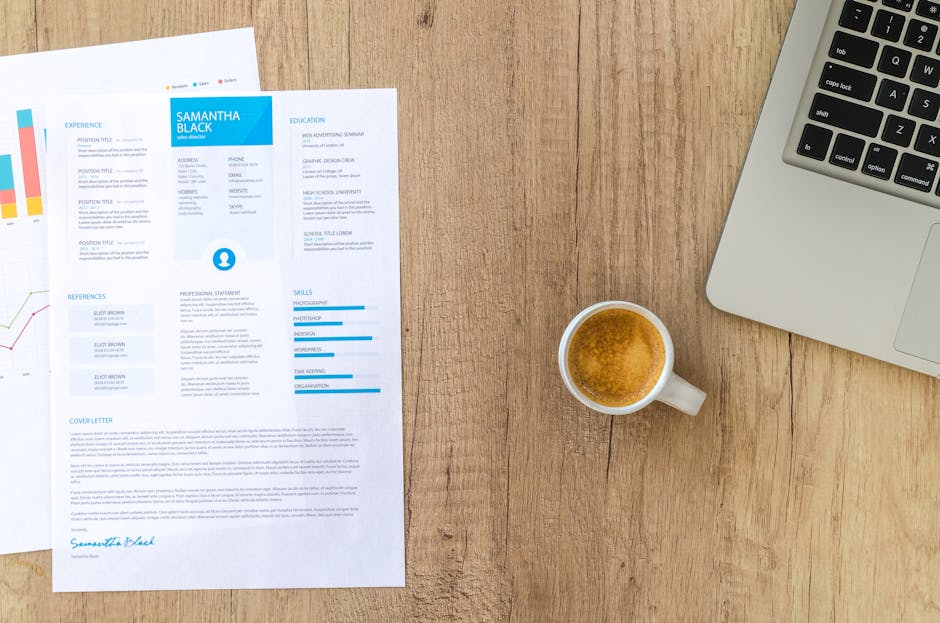
Rule 6 — Polish your formatting and avoid graphic elements
ATS systems struggle to interpret non-text elements. Remove from your resume:
- Images, logos, and photos embedded in the document body (photos are rarely needed in UK/US resumes)
- Skill graphics (progress bars, star ratings)
- Headers and footers for important information: many ATS systems don't read these areas
- Decorative fonts or icons
Stick to readable, standard fonts: Arial, Calibri, Georgia, or Times New Roman. Simplicity is your best defence against any algorithm.
Rule 7 — Quantify your achievements with concrete numbers
Beyond passing the ATS filter, think about the second stage: convincing the human recruiter. Modern ATS platforms, especially those used by Fortune 500 companies and major recruiters on LinkedIn, increasingly include semantic analysis features. Quantified data strengthens your score and credibility:
- "Increased revenue by 25% within 18 months"
- "Managed a team of 8 people"
- "Reduced delivery times by 30%"
These precise statements make your profile more relevant to both algorithms and recruiters.
🚀 Your ATS Resume Checklist at a Glance
An ATS-compatible resume isn't a generic or personality-free document—it's a smart resume that speaks to both algorithms and hiring managers. Form serves function.
Before you hit submit on your next application, check these 7 points:
- ✅ Correct file format (PDF or .docx as specified)
- ✅ Single-column layout with no complex tables
- ✅ Standard, recognizable section headings
- ✅ Job posting keywords woven in naturally
- ✅ Abbreviations spelled out in full on first mention
- ✅ No graphics or non-text visual elements
- ✅ Achievements backed by concrete numbers
Following these ATS resume rules for every application might feel repetitive, but it's now essential in both UK and US hiring processes. The good news? Once you develop the right system, it becomes a quick and automatic habit.
Ready to build a resume that passes every filter? Rise & Hire helps you generate an ATS-optimized resume professionally in just minutes. Our platform automatically builds in best practices for formatting and optimisation, helping you land the interview you deserve. Stop letting an algorithm decide your fate.