
🎯 How to Stand Out in Your Job Search: Top Tips from Career Experts
Finding your dream job can feel overwhelming, especially when you're competing with thousands of other candidates. Whether you're searching on LinkedIn or Indeed, standing out requires more than just submitting applications. Here's what the experts recommend.
📋 Optimize Your Resume for ATS Systems
Most companies use Applicant Tracking Systems (ATS) to filter applications before a human ever sees them. Your resume needs to be ATS-friendly to get past these digital gatekeepers.
- Use standard formatting without tables, headers, or complex graphics
- Include relevant keywords from the job description
- Keep it to one page for early-career roles, two pages maximum for senior positions
- Use clear section headings: Professional Summary, Experience, Education, Skills
A well-optimized resume can mean the difference between getting an interview and being filtered out automatically. According to recent studies, over 75% of resumes never reach a human recruiter.
💼 Craft a Compelling Cover Letter

In the UK and US job markets, a strong cover letter can still set you apart. Address it to a specific person when possible, and keep it to three or four paragraphs.
- Opening: Explain why you're interested in this specific role and company
- Middle: Highlight relevant achievements with concrete examples
- Closing: Express enthusiasm and include a call to action
Pro tip: Personalize each cover letter. Generic applications have a much lower success rate.
🔗 Build Your Professional Brand on LinkedIn
LinkedIn is essential for job hunting in today's market. Your profile should be just as polished as your resume.
- Use a professional headshot as your profile picture
- Write a compelling headline and summary that includes keywords
- Regularly share insights or articles relevant to your industry
- Engage with content from companies you want to work for
- Ask for recommendations from former colleagues and managers
Research shows that candidates with complete LinkedIn profiles are 40 times more likely to receive interview requests than those with incomplete profiles.
💷 Understanding Market Salary Expectations
Before applying, know what you're worth. Salary ranges vary significantly by location and experience level:
- London: Marketing Manager positions typically range from £28,000 to £45,000 annually
- New York: Similar roles average $65,000 to $95,000 USD per year
- Software Developer (mid-level): £40,000–£60,000 in the UK; $80,000–$120,000 in the US
Check platforms like PayScale and Glassdoor for detailed salary data in your field and location.
🎤 Ace Your Interview
Once you've landed an interview, preparation is key. Use the STAR method (Situation, Task, Action, Result) to structure your answers to behavioural questions.
- Research the company thoroughly—know their recent news, products, and company culture
- Prepare 3–5 specific examples of your achievements
- Have thoughtful questions ready to ask your interviewer
- Practice out loud, not just in your head
✅ Follow-Up Like a Professional

After your interview, send a thank-you email within 24 hours. Reference specific points from your conversation and reiterate your interest in the role. This simple step can significantly improve your chances.
Key Takeaway: Job hunting is a numbers game, but quality matters more than quantity. Focus on tailored applications, a strong personal brand, and thorough preparation. The right opportunity is out there—you just need to position yourself to find it.
Good luck with your job search! 🚀
🤖 How AI is Transforming Recruitment in the UK and US
Over the past few years, the job market in the UK and US has experienced a quiet yet profound revolution. Recruiters at major corporations, consulting firms, and even small businesses now rely on resume screening algorithms to manage hundreds, sometimes thousands of applications. AI-powered recruitment is no longer a futuristic promise—it's a concrete reality in 2025, and its impact will only grow in 2026.
Whether you're actively job hunting on LinkedIn and Indeed, registered with local recruitment agencies, or keeping an eye out for your next permanent role in your field, understanding how AI resume screening works has become essential. A poorly formatted resume, even if brilliant in content, can be rejected in seconds by an automated system before a human recruiter ever sees it.
In this article, we break down what's changing, how these tools work, and most importantly, how to tailor your application to get past modern digital filters.
📋 How CV Screening Algorithms Work in 2026
ATS systems — Applicant Tracking Systems — are software programmes that automatically analyse CVs before a recruiter even sees them. Platforms like Workday, Lever, and Greenhouse are widely used by major multinational corporations such as Unilever, HSBC, and Accenture.
In practice, the 2026 CV algorithm operates in several stages:
- Data reading and extraction: the AI identifies your skills, experience, qualifications, and industry keywords.
- Matching score: your profile is compared against the job description and receives a relevance score.
- Automatic filtering: only CVs that exceed a certain threshold are passed to the HR teams.
- Candidate ranking: shortlisted profiles are sorted by estimated relevance.
This process is fast and seemingly objective, but demanding: a CV in an unoptimised PDF format, with complex tables or decorative fonts, can simply be unreadable to these systems. Content matters, but so does presentation — now more than ever.
🎯 What ATS Systems Really Look for in Your Resume
To maximise your chances against ATS resume screening, you need to understand what these systems actually value. Contrary to popular belief, visual creativity won't help you get past an algorithm. Here's what really matters:
- Keywords from the job description: ATS systems search for specific terms. If the posting mentions "Agile project management" or "Salesforce expertise", these exact phrases need to appear in your resume.
- Clear, hierarchical structure: work experience, education, skills — each section should be easy to scan and clearly separated.
- Dates and chronological clarity: a timeline with specific months and years (MM/YYYY) is far better interpreted than vague employment history.
- Your current or target job title: placing a precise job title at the top of your resume significantly improves your match score.
- File format: a standard Word document or PDF remains the recommended format for most ATS platforms.
« A resume optimised for ATS isn't a weak resume. It's a strategic one — speaking to both algorithms and humans. »
In the UK and US job markets, where cover letters are increasingly optional — unlike some traditional European practices — it's still crucial that your resume and any cover letter you submit are aligned in their keywords and positioning.
💡 Common Resume Mistakes That Fail ATS Screening
Even experienced candidates make critical errors that derail their application before any human sees it. Here are the most common pitfalls we observe in today's UK and US job markets:
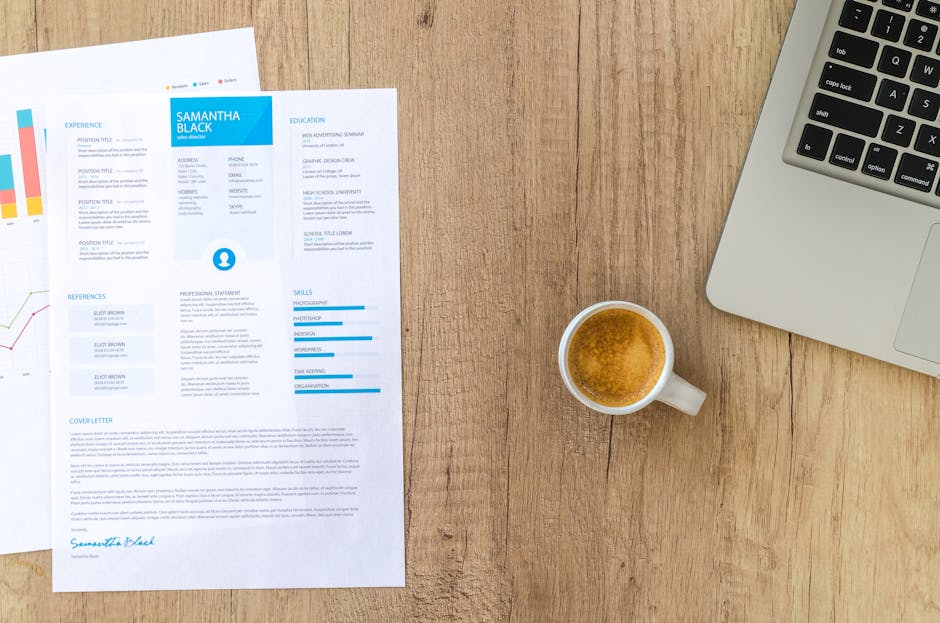
- Using complex graphic resume templates: multiple columns, icons, and visual skill bars confuse Applicant Tracking Systems (ATS) and often render your resume unreadable to automated screening tools.
- Failing to tailor your resume to each role: a generic resume consistently scores lower than a customised one. Personalisation is essential, whether you're applying for permanent or contract positions.
- Leaving out obvious skills: if you've used Excel for 10 years, spell it out. AI systems don't read between the lines.
- Overlooking acronyms and variations: write both "HR" and "Human Resources," "AI" and "Artificial Intelligence" to cover all search variations the system might use.
- Poor file naming or formatting: name your file professionally—for example Resume_FirstName_LastName_JobTitle.pdf—and verify it opens correctly across devices.
These mistakes are entirely avoidable. They don't reflect your professional worth, but they're enough to eliminate you from automated screening. Understanding the rules of the game gives you a real competitive edge.
🚀 Adapting Your Job Application Strategy in the Age of AI
With AI-powered recruitment becoming increasingly widespread, the good news is that straightforward, effective strategies exist to maximise your chances. Here's a methodical approach:
Decode Each Job Description Like a Text to Study
Before applying, read the job posting carefully and identify recurring terms, technical skills mentioned, and valued behaviours. Weave these naturally into your resume and cover letter.
Opt for a Clean, Professional Format
Choose a simple layout: single-column design, readable font (Calibri, Arial, Times New Roman), clearly visible section headings. Visual clarity benefits both the ATS system and the human recruiters who'll review your resume after the algorithmic screening.
Quantify Your Achievements
Both AI systems and recruiters value concrete results. "Increased revenue by 15%" or "managed a team of 8 people" speaks far louder than a vague description of your responsibilities.
Keep Your Profile Consistent Across All Platforms
Your LinkedIn profile, resume, and cover letter should tell the same story. Many recruiters cross-reference these sources before inviting candidates to interview.
The ATS system isn't your enemy—it's a filter you can learn to navigate strategically. Candidates who adapt quickly gain a significant advantage over those still unaware of how these systems work.
📊 Rise & Hire: Your ATS-Optimised Resume in Minutes
Want to beat the automated screening systems and get your resume in front of real hiring managers? Rise & Hire is the leading platform designed to help you create a structured, professional, and ATS-optimised resume in minutes. Our intelligent tool generates a document that's perfectly readable by recruitment algorithms, while maintaining a polished appearance for human recruiters. Whether you're submitting a speculative application, responding to a job posting on Indeed or LinkedIn, or applying to a major corporation, Rise & Hire guides you professionally every step of the way. Don't let an algorithm decide your career prospects—take control with a resume that works.